The pharmaceutical meaning of chirality, the real impurity space, and where chiral HPLC fits
The pharmaceutical meaning of chirality
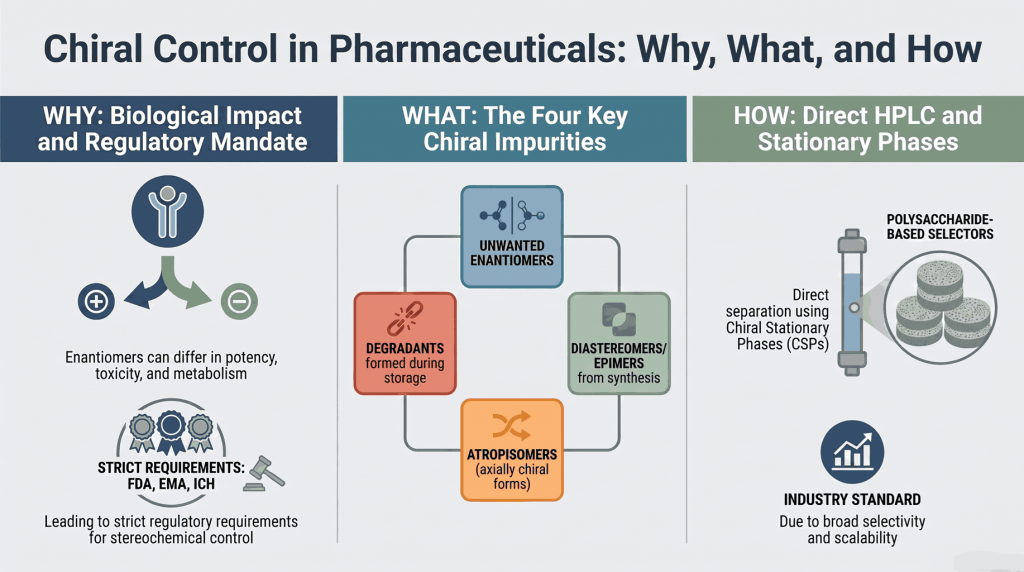
Chirality matters in drug development for a simple reason. Biological systems are chiral, so the body does not experience two stereoisomers as the same molecule. FDA stated this explicitly in its landmark 1992 stereoisomer guidance, noting that enantiomers may differ in pharmacokinetics and in pharmacologic or toxicologic effects, and that modern technology removed the old practical excuse that racemates were easier to make than single enantiomers. EMA’s long-standing chirality guidance makes the same point from a development perspective, requiring explicit consideration of chiral active substances and their stereochemical behaviour during medicinal product development. [1,2]
That scientific reality has not become less important with time. A recent perspective on new drug approvals from 2013 to 2022 showed that chirality still strongly shapes the approved small-molecule landscape, with regulatory and industrial preference continuing to favour single-enantiomer products in many settings. The same literature also highlights growing attention to atropisomerism, especially in modern medicinal chemistry. [3,4]
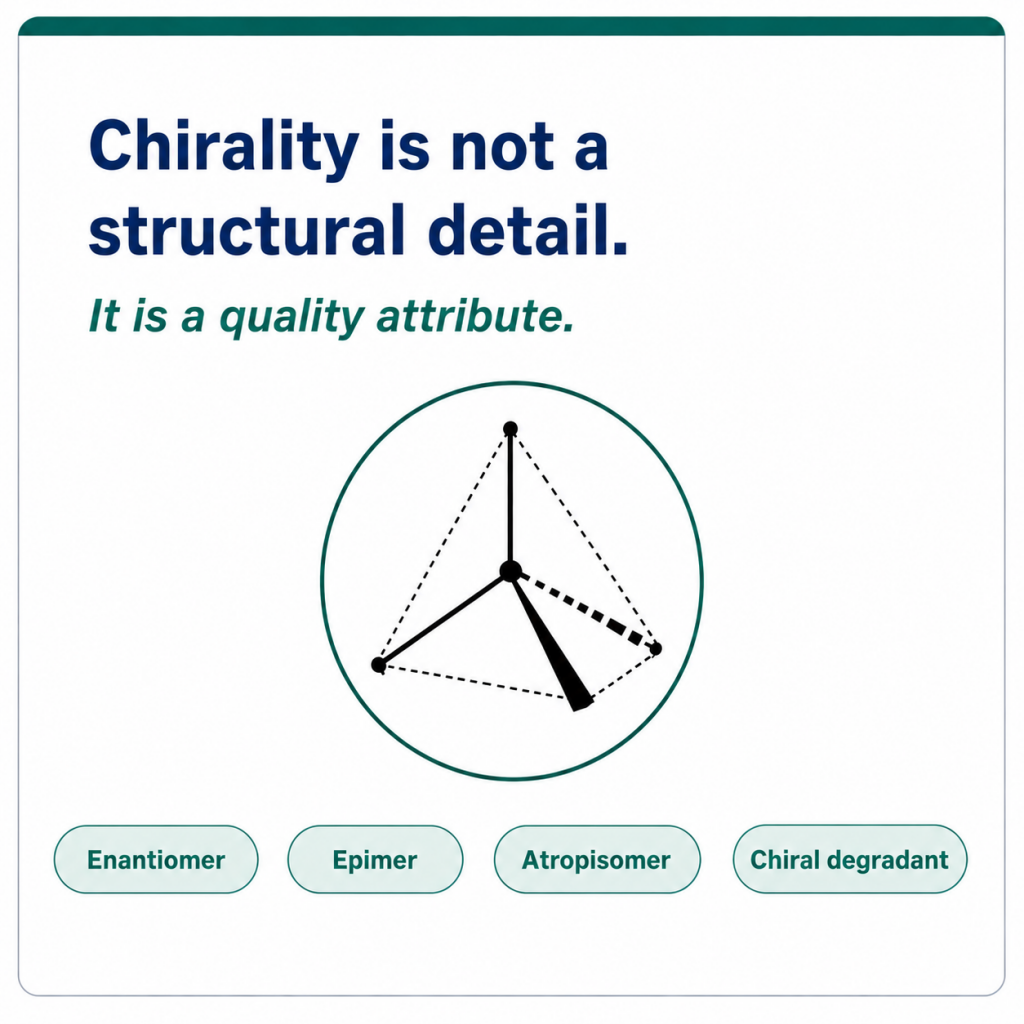
For the analytical scientist, chirality is therefore not a decorative structural feature. It is a potential critical quality attribute. If the wrong stereoisomer changes potency, safety margin, disposition, or degradant behaviour, then stereochemical composition has to be measured, understood, and controlled with the same seriousness as any other clinically relevant impurity profile. FDA’s stereoisomer guidance, EMA’s chirality note, and ICH Q6A all point in that direction. [1,2,5]
What counts as a stereochemical impurity
In routine discussion, “chiral impurity” usually means the opposite enantiomer of a single-enantiomer API. That use is too narrow. The practical impurity space is broader:
Stereochemically altered degradation products formed by racemisation or epimerisation during synthesis, isolation, formulation, or storage.
- Undesired enantiomers of a single-enantiomer API, typically controlled at trace level.
- Diastereomers and epimers formed during synthesis or work-up, often separable by achiral methods, chiral methods, or both, depending on the rest of the structure.
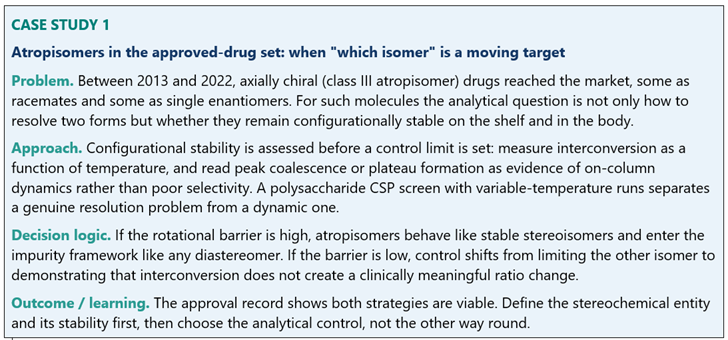
- Atropisomers when rotational barriers are high enough to make the forms separable on the relevant time scale.
- Stereochemically altered degradation products formed by racemisation or epimerisation during synthesis, isolation, formulation, or storage.
FDA expressly distinguishes enantiomers from diastereomers and geometric isomers, noting that diastereomers are generally chemically and pharmacologically distinct, and modern atropisomerism literature extends the same analytical caution to axially chiral molecules. [1,4]
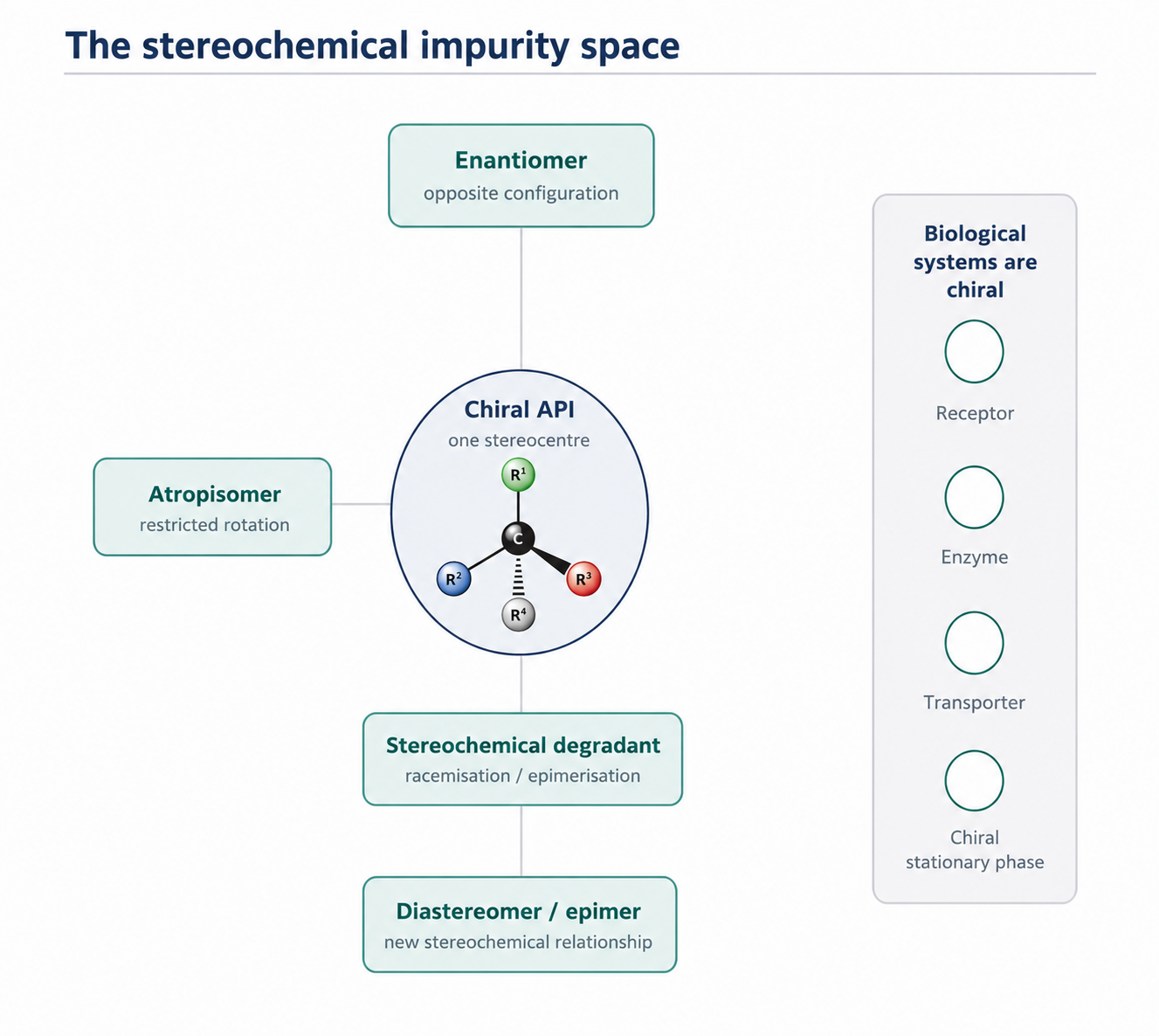
This distinction matters because analytical strategy follows the stereochemical problem. Atropisomers add a further complication: configurational stability is itself a development question. If interconversion is fast on the analytical time scale, what looks like a poor separation may in fact be a dynamic system rather than a weak method, and it will present as peak broadening, a plateau between peaks, or coalescence that changes with temperature. [1,4]
Why stereoisomers can behave differently
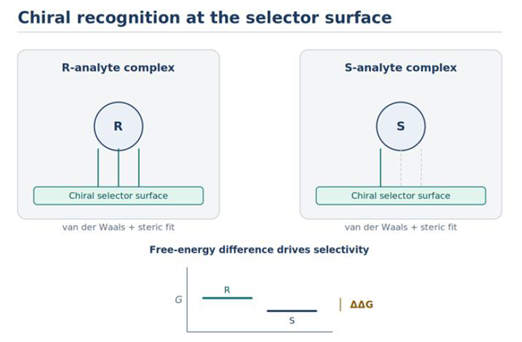
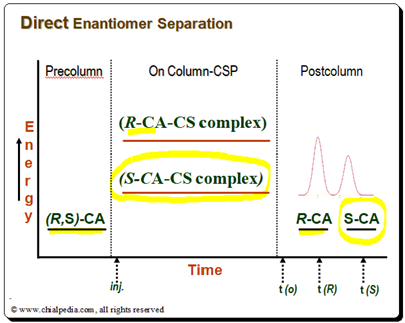
The old shorthand still holds: enantiomers share bulk physical properties in achiral environments but diverge in chiral ones because they form transient diastereomeric complexes with receptors, enzymes, transporters, and chiral selectors. Modern mechanistic work shows that chiral recognition in chromatography arises from small but reproducible free-energy differences between these complexes, driven by a combination of hydrogen bonding, ion and dipole interactions, pi-pi stacking, van der Waals contacts, inclusion, steric fit, and solvation, with the conformational adaptability of both analyte and selector contributing. The three-point interaction rule remains a useful teaching device, but the current picture is a balance of enthalpic and entropic terms rather than a fixed geometric contact count. [6,7,8] Read more @ <https://chiralpedia.com/blog/direct-enantiomer-separation-by-hplc/>.
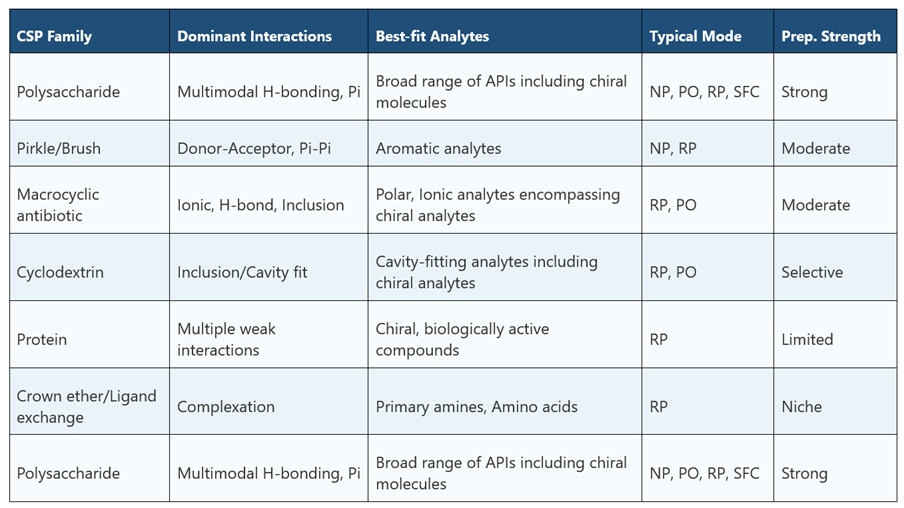
Chiral Stationary Phase (CSP) Map (Recognition Mechanisms, Suitable Analytes, Separation Modes, and Preparative Utility)
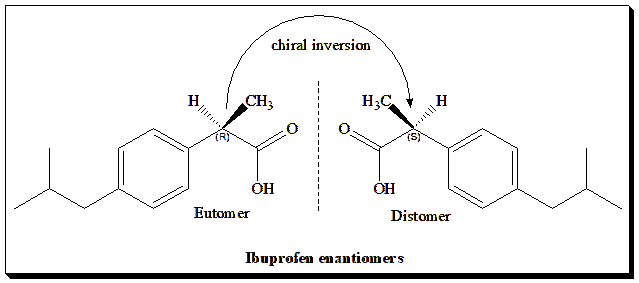
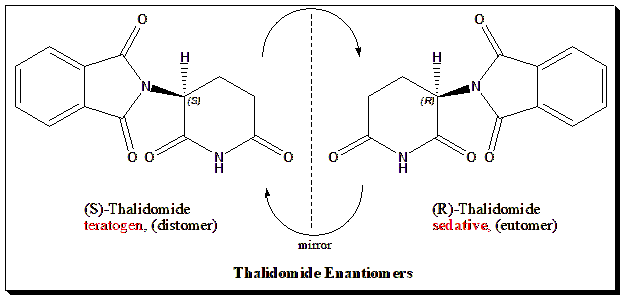
Pharmaceutical consequences follow directly. FDA’s guidance catalogued cases where both enantiomers are active, where one is active and the other largely inactive, where the two have different activities, and where toxicity tracks mainly one stereoisomer. Reviews of chiral drugs document similar patterns across pharmacology, toxicology, metabolism, and chiral inversion. Thalidomide is the cautionary symbol, but it is not the only instructive case: ibuprofen undergoes metabolic inversion, warfarin enantiomers differ in disposition and potency, and the chiral-switch literature shows how the choice between racemate and single enantiomer can change dose, metabolism, and analytical requirements. [1,3,9]
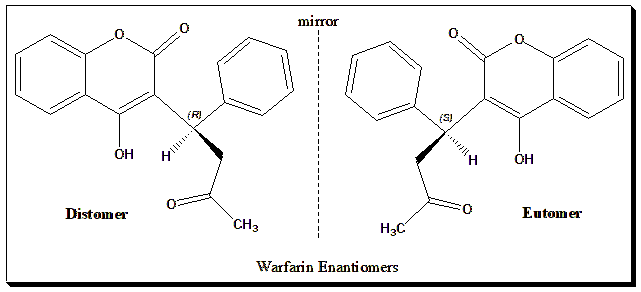
A restrained conclusion is better than a slogan here. Chirality does not automatically mean that only one enantiomer is useful, nor that racemates are inherently inferior products. Recent commentary pushes back against the claim that single enantiomers are always superior. Read more @ <https://chiralpedia.com/blog/racemates-%e2%89%a0-less-safe-rethink-chirality/>. The correct development position is case-specific: characterise the stereochemical behaviour, understand the pharmacology and disposition, and build controls that reflect real patient risk. [1,3,10]
Why chiral impurity control is a lifecycle issue
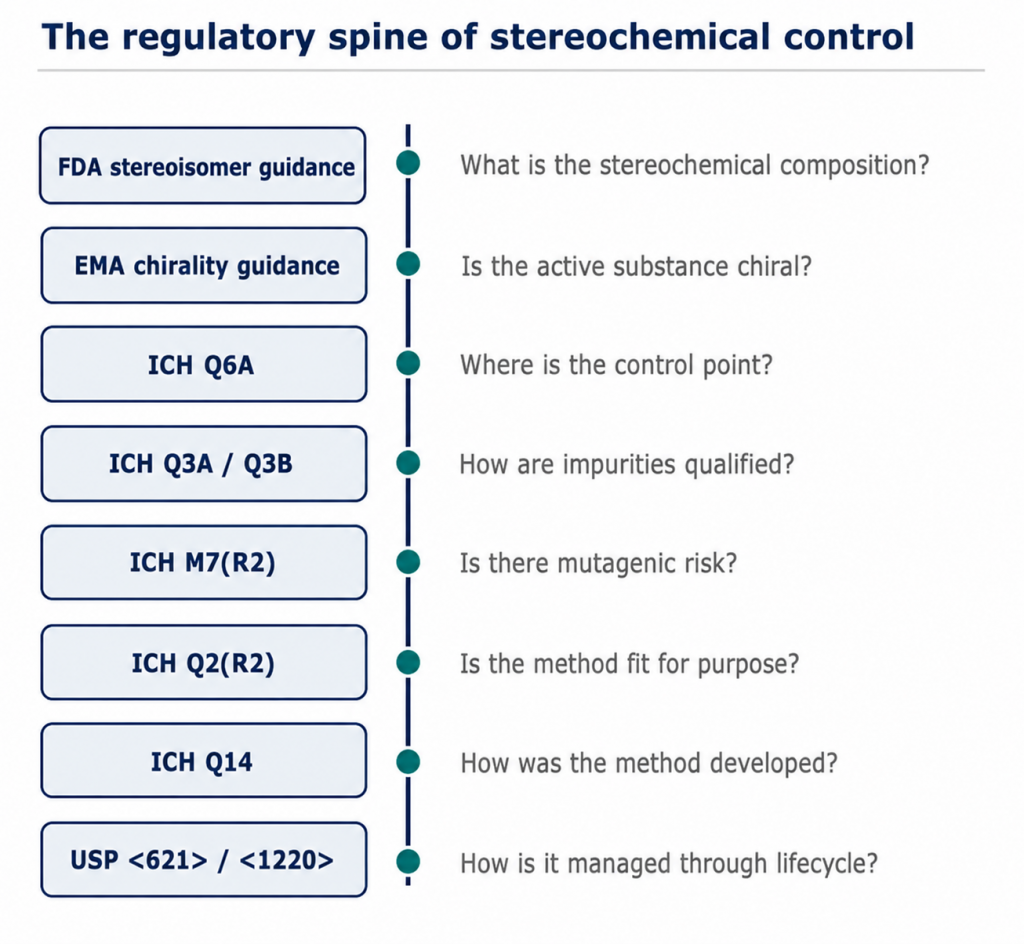
Chiral impurity control begins before the validated method does. It starts with route selection, asymmetric synthesis capability, salt selection, crystallisation behaviour, protection and deprotection conditions, and the possibility of racemisation or epimerisation during work-up. It continues through specification setting, formulation development, stability testing, process changes, site transfer, and post-approval lifecycle management. ICH Q6A is unusually explicit: for a single-enantiomer drug substance, control of the other enantiomer should be considered like any other impurity, even where technical limitations affect achievable quantitation, and for drug products, control of the other enantiomer is considered necessary unless racemisation is shown to be insignificant during manufacture and storage. [5]
That language makes a practical point. A chiral impurity limit is not an analytical convenience; it sits inside the control strategy. ICH Q3A(R2) and Q3B(R2) define the broader framework for reporting, identifying, controlling, and qualifying impurities, and ICH M7(R2) adds a safety-driven framework where a chiral impurity or degradant is also potentially mutagenic. Even when these guidelines are not chirality-specific, they govern how stereochemical impurities are justified, trended, identified, and, where needed, toxicologically qualified. [5,11,12,13]
Where chiral HPLC fits
Among the approaches to enantiomeric analysis, direct liquid chromatography on a chiral stationary phase remains the workhorse of the pharmaceutical laboratory. FDA’s 1992 guidance recognised early that specialised chiral techniques would be needed for correct identification, separation, and measurement of stereoisomers, and current reviews still describe direct CSP-based HPLC as the most established route for pharmaceutical enantioseparation. [1,14]
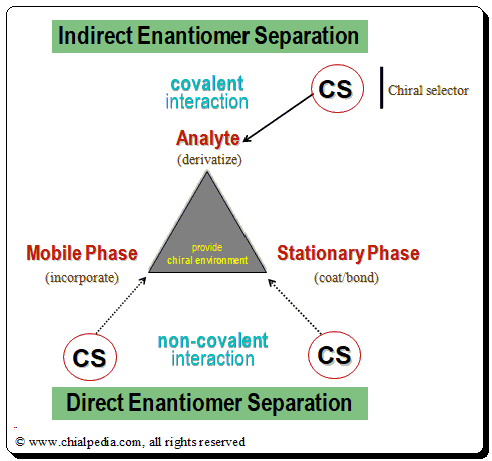
Two strategic options exist. In an indirect method, enantiomers are derivatised with a chiral reagent to form diastereomers that are then separated on an achiral column. In a direct method, the analyte interacts with a chiral environment during separation, usually a chiral stationary phase and less commonly a chiral mobile-phase additive. Indirect methods can be powerful for certain compound classes, but they add reaction control, derivative stability, and reagent-related impurity considerations, so current practice prefers direct methods whenever a robust CSP solution is available. [15]
A practical overview of chiral stationary phases
The modern CSP library is broad but not flat. Polysaccharide-based phases dominate the day-to-day pharmaceutical landscape because they combine broad selectivity with practical scalability in both analytical and preparative work. Amylose and cellulose carbamates and benzoates provide flexible, multimodal recognition across normal-phase, reversed-phase, polar-organic, and SFC conditions, particularly in immobilised formats. [16,17]
Other families remain essential because no single selector solves every problem. Pirkle or brush-type phases offer more defined interaction motifs and are informative when aromatic, hydrogen-bonding, and donor-acceptor interactions dominate. Macrocyclic antibiotic phases bring a dense menu of ionic, hydrogen-bonding, hydrophobic, and inclusion-like interactions, often excelling with amines and amino acids. Cyclodextrin phases suit analytes that fit an inclusion cavity. Protein-based phases have a more specialised, often bioanalytical role. Crown-ether and ligand-exchange phases remain useful niche tools for primary amines and amino-acid-like analytes. [18,19]
The right mindset at the start of development
One point is settled: chiral method development is not a linear analogue of achiral reversed-phase development. Retention and selectivity are more analyte-specific, the energy differences being exploited are smaller, and prior experience, while valuable, does not remove the need for structured screening. A rational screening plan shortens the work; it does not eliminate the empirical element. [20]
Current best practice is therefore to begin with a stereochemical risk assessment, a structural read-across of the analyte, and a deliberately designed screen spanning a limited but information-rich set of selectors and modes. The analytical question must be stated at the outset. Is the method for release of a single enantiomer, for monitoring an asymmetric synthesis, for tracing racemisation in stressed samples, for qualifying a minor chiral degradant, or for isolating an impurity standard? The answer determines acceptable run time, target sensitivity, desired elution order, solvent choices, detector compatibility, and whether preparative transfer is likely later. That practical strategy is the subject of Episode 2.
References
1. U.S. Food and Drug Administration. Development of New Stereoisomeric Drugs. Rockville (MD): FDA; 1992. Available from: https://www.fda.gov/regulatory-information/search-fda-guidance-documents/development-new-stereoisomeric-drugs
2. European Medicines Agency (CPMP). Investigation of Chiral Active Substances. London: EMA; adopted 1993, effective 1994. Ref. 3CC29a.
3. McVicker RU, O’Boyle NM. Chirality of new drug approvals (2013-2022): trends and perspectives. J Med Chem. 2024;67(4):2305-2320. https://doi.org/10.1021/acs.jmedchem.3c02239
4. Basilaia M, Chen MG, Secka J, Gustafson JL. Atropisomerism in the pharmaceutically relevant realm. Acc Chem Res. 2022;55(20):2904-2919. https://doi.org/10.1021/acs.accounts.2c00500
5. International Council for Harmonisation. Q6A Specifications: Test Procedures and Acceptance Criteria for New Drug Substances and New Drug Products: Chemical Substances. Geneva: ICH; 1999. Available from: https://database.ich.org/sites/default/files/Q6A%20Guideline.pdf
6. Lammerhofer M. Chiral recognition by enantioselective liquid chromatography: mechanisms and modern chiral stationary phases. J Chromatogr A. 2010;1217(6):814-856. https://doi.org/10.1016/j.chroma.2009.10.022
7. Scriba GKE. Update on chiral recognition mechanisms in separation science. J Sep Sci. 2024;47(9-10):e2400148. https://doi.org/10.1002/jssc.202400148
8. Peluso P, Chankvetadze B. Recognition in the domain of molecular chirality: from noncovalent interactions to separation of enantiomers. Chem Rev. 2022;122(16):13235-13400. https://doi.org/10.1021/acs.chemrev.1c00846
9. Nguyen LA, He H, Pham-Huy C. Chiral drugs: an overview. Int J Biomed Sci. 2006;2(2):85-100.
10. Israel Agranat & Ilaria D’Acquarica (2025), Racemic drugs are not necessarily less efficacious and less safe than their single-enantiomer components. European Journal of Pharmaceutical Sciences. https://doi.org/10.1016/j.ejps.2025.107082
11. International Council for Harmonisation. Q3A(R2) Impurities in New Drug Substances. Geneva: ICH; 2006. Available from: https://database.ich.org/sites/default/files/Q3A%28R2%29%20Guideline.pdf
12. International Council for Harmonisation. Q3B(R2) Impurities in New Drug Products. Geneva: ICH; 2006.
13. International Council for Harmonisation. M7(R2) Assessment and Control of DNA Reactive (Mutagenic) Impurities in Pharmaceuticals to Limit Potential Carcinogenic Risk. Geneva: ICH; 2023. Available from: https://database.ich.org/sites/default/files/ICH_M7%28R2%29_Guideline_Step4_2023_0216_0.pdf
14. Liu H, Wu Z, Chen J, Wang J, Qiu H. Recent advances in chiral liquid chromatography stationary phases for pharmaceutical analysis. J Chromatogr A. 2023 Oct 11;1708:464367. doi: 10.1016/j.chroma.2023.464367.
15. Ilisz I, Berkecz R, Peter A. Application of chiral derivatizing agents in the high-performance liquid chromatographic separation of amino acid enantiomers: a review. J Pharm Biomed Anal / June 2008, 47(1):1-15. DOI:10.1016/j.jpba.2007.12.013
16. Chankvetadze B. Recent trends in preparation, investigation and application of polysaccharide-based chiral stationary phases for separation of enantiomers in high-performance liquid chromatography. TrAC Trends Anal Chem. 2020;122:115709. https://doi.org/10.1016/j.trac.2019.115709
17. Teixeira J, Tiritan ME, Pinto MMM, Fernandes C. Chiral stationary phases for liquid chromatography: recent developments. Molecules. 2019;24(5):865. https://doi.org/10.3390/molecules24050865
18. Ward TJ, Farris AB. Chiral separations using the macrocyclic antibiotics: a review. J Chromatogr A. 2001;906(1-2):73-89. https://doi.org/10.1016/S0021-9673(00)00941-9
19. Haginaka J. Protein-based chiral stationary phases for high-performance liquid chromatography enantioseparations. J Chromatogr A. 2001;906(1-2):253-273. https://doi.org/10.1016/S0021-9673(00)00504-5
20. Tarafder A, Miller L. Chiral chromatography method screening strategies: past, present and future. J Chromatogr A. 2021;1638:461878. https://doi.org/10.1016/j.chroma.2021.461878
Further Reading
https://chiralpedia.com/glossary.php
Donor-Acceptor (Pirkle)-type CSPsProtein-based CSPs
Measuring quality of chromatogram – Tools 1.0
Measuring quality of chromatogram- Tools 2.0
Measuring quality of chromatogram- Tools 3.0
Controlling selectivity-Solvent role-1.0
Controlling selectivity-Solvent role-2.0
Controlling selectivity-Additional factors-1.0 – pH
Controlling selectivity-Additional factors-2.0 – temperature